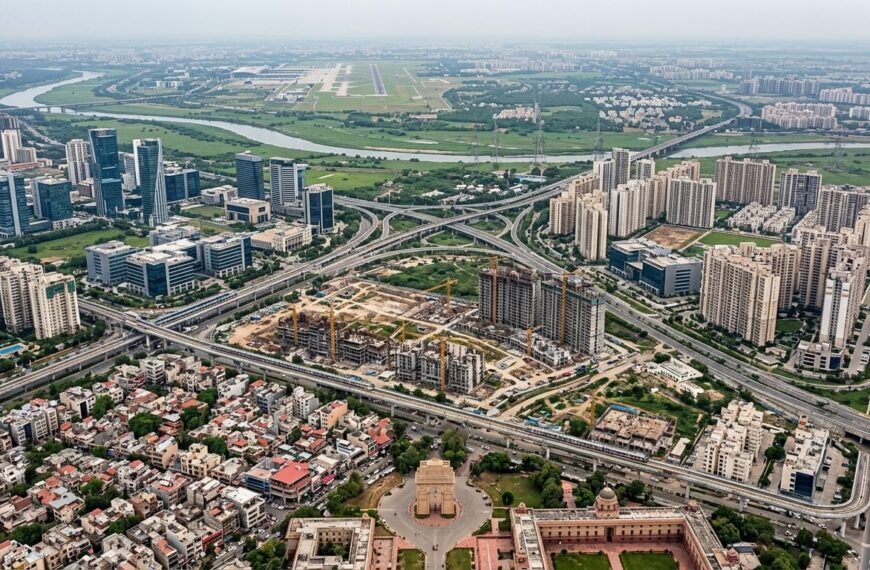

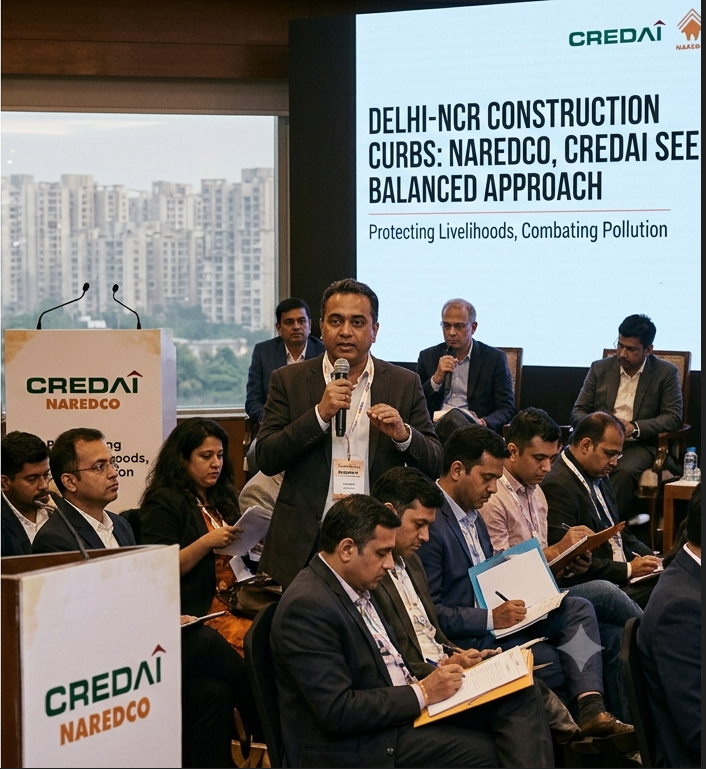
Delhi-NCR’s construction sector is facing fresh uncertainty as pollution-control restrictions raise concerns across the real estate industry. Industry bodies NAREDCO and CREDAI are calling for a more balanced approach, emphasising the need to address air pollution without disrupting construction activity, project timelines and the livelihoods of thousands of workers. The debate highlights the challenge of balancing environmental responsibility with the region’s ongoing infrastructure and real estate development.
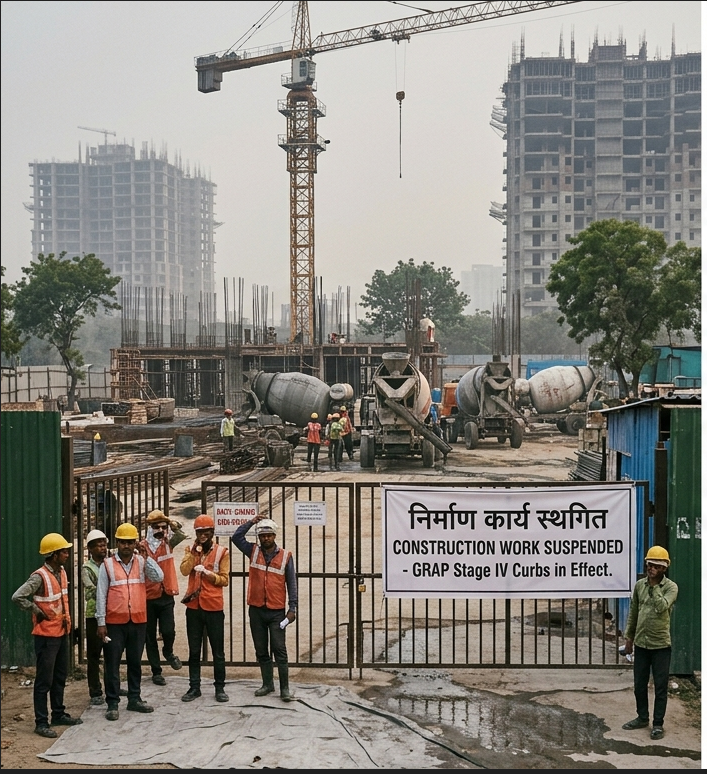
NEW DELHI : The annual battle against air pollution in Delhi-NCR is once again bringing the construction industry under regulatory scrutiny. The Commission for Air Quality Management (CAQM) has announced restrictions on dust-generating construction and demolition activities across the National Capital Region from November 5 to November 20, 2026.The decision is aimed at controlling particulate pollution during the winter season, when deteriorating meteorological conditions frequently contribute to poor air quality across Delhi and neighbouring districts. However, the restrictions have also raised concerns within the real estate and infrastructure sectors, with industry bodies NAREDCO and CREDAI seeking a more balanced and practical regulatory approach.
What Does the CAQM Order Mean?
Construction activities are recognised as one of the contributors to dust pollution, particularly where excavation, demolition, debris handling and material transportation are involved. The latest restrictions cover specified external construction and demolition activities.The reported scope also includes infrastructure works involving highways, roads, flyovers, overbridges, power transmission lines, pipelines and telecommunications infrastructure, subject to the exemptions and conditions specified in the applicable order.Certain essential public infrastructure activities may qualify for exemptions. Consequently, developers and contractors must examine the exact CAQM directions applicable to their projects rather than assume that all construction work is either permitted or prohibited.
Why Are Developers Concerned?
The real estate sector operates through interconnected construction schedules, contractor agreements, material procurement arrangements and financial commitments. Even a temporary interruption can affect the sequencing of construction activities, particularly where multiple contractors and agencies are involved.
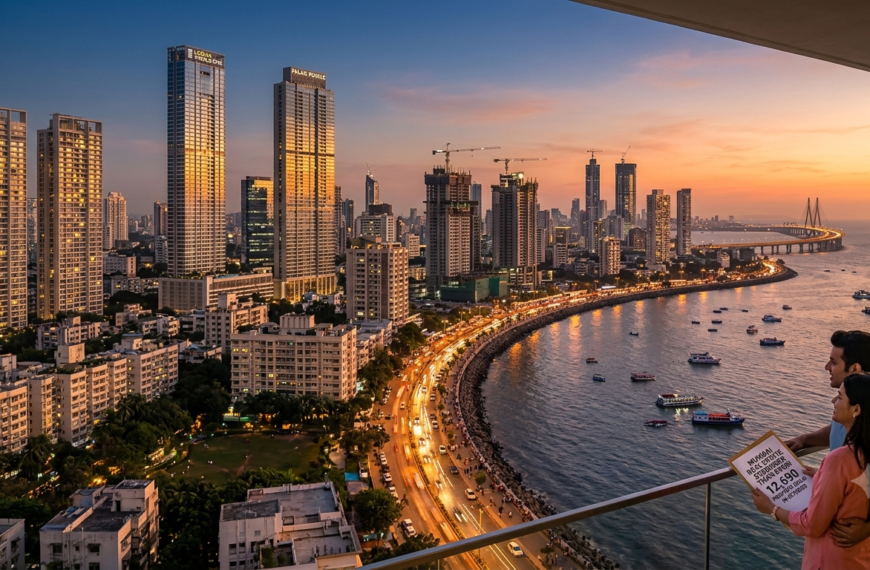
Industry representatives have highlighted the need to distinguish between construction activities that generate significant dust and those that can continue under appropriate pollution-control measures. A blanket approach, they argue, could affect project execution, employment and delivery commitments.The concern is particularly relevant for developers handling large residential and commercial developments across Gurugram, Noida, Greater Noida, Ghaziabad and Faridabad.
Potential Impact on Homebuyers
Construction restrictions can affect the pace of work at residential developments, potentially creating uncertainty around possession schedules.For homebuyers who have already committed substantial amounts through savings or housing loans, delays can have financial implications.
However, every delay must be examined on its own merits.A CAQM restriction does not automatically establish a developer’s liability for every project delay. The applicable RERA registration, contractual commitments, sanctioned extensions and legal provisions must be considered.Homebuyers should seek written construction updates and revised project timelines from developers.
Compliance Will Remain Critical
Developers must maintain appropriate dust-control arrangements, including site covering, water sprinkling, debris management and compliance with applicable environmental requirements.Construction companies should also maintain records of work interruptions and regulatory directions wherever relevant.Environmental compliance is not merely a regulatory obligation; it is increasingly becoming an important part of responsible real estate development.
Balancing Environmental Protection and Economic Activity
Delhi-NCR needs effective pollution control. Equally, the region’s real estate and infrastructure sectors support substantial employment and economic activity.The challenge is to develop a framework that protects public health without creating avoidable disruptions to projects that can operate safely under prescribed environmental safeguards.
PropertySansar Perspective
The latest restrictions highlight a recurring policy challenge for Delhi-NCR: how to balance environmental priorities with the operational realities of a large construction economy. A more targeted, transparent and technology-driven compliance framework could help regulators achieve pollution-control objectives while allowing eligible construction activities to proceed responsibly.

 By



 By