


SIP Investment Guide: How Small Monthly Investments Can Create Long-Term Wealth

Discover how a Systematic Investment Plan (SIP) helps investors build long-term wealth through disciplined investing, rupee cost averaging, and the power of compounding.
SIP: A Smarter Way to Build Wealth with Small Monthly Investments
In today’s fast-paced financial landscape, securing the future has become a priority for individuals across all income groups. However, many people hesitate to invest because they believe wealth creation requires a large lump-sum investment. In reality, consistent investing through a Systematic Investment Plan (SIP) offers an accessible and effective way to build substantial wealth over time—even with modest monthly contributions.
One of the biggest advantages of SIP is that investors can begin with a small amount, such as ₹500 or ₹1,000 per month, and gradually accumulate a sizeable investment corpus through disciplined and long-term investing.
What is a Systematic Investment Plan (SIP)?
A Systematic Investment Plan (SIP) is a structured method of investing in mutual funds where an investor contributes a fixed amount at regular intervals—typically every month.
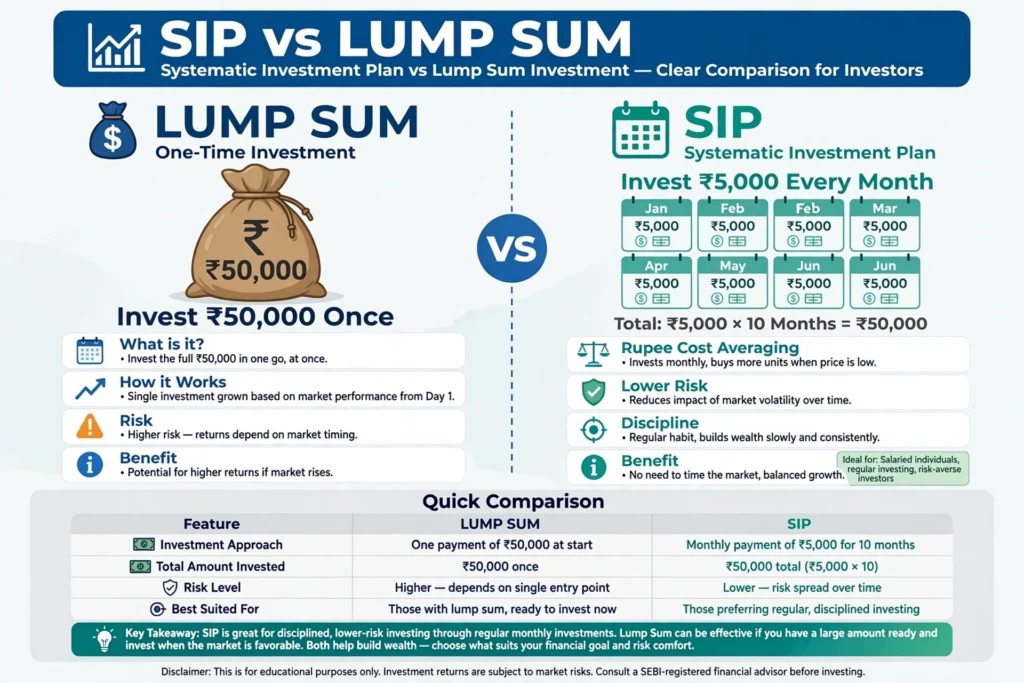
Much like a Recurring Deposit (RD), SIP encourages disciplined savings. However, instead of depositing money into a bank account, the funds are invested in carefully selected mutual fund schemes that have the potential to generate market-linked returns over the long term.
For example, rather than investing ₹50,000 in a single transaction, an investor can invest ₹5,000 every month through SIP, making investing both convenient and financially manageable.
How SIP Helps Build Wealth Gradually
SIP is particularly beneficial for salaried professionals, first-time investors, and individuals who prefer investing from their monthly income without disturbing their financial stability.
By investing regularly, investors avoid the challenge of trying to predict market highs and lows. Instead of waiting for the “perfect time” to invest, SIP ensures that investments continue regardless of market conditions.
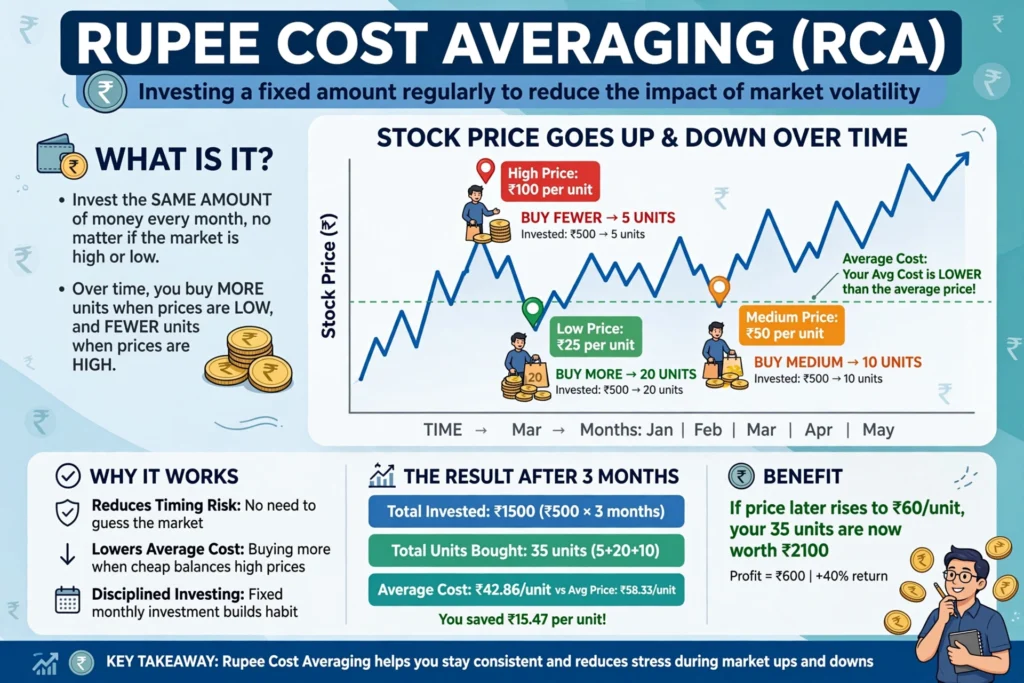
When markets decline, the same investment amount purchases more mutual fund units. Conversely, when markets rise, fewer units are purchased. Over time, this helps reduce the average purchase cost—a concept known as Rupee Cost Averaging.
The Power of Compounding: The Earlier You Start, the Greater the Reward

One of SIP’s strongest wealth-building advantages is the Power of Compounding.
Compounding allows not only the original investment but also the returns generated on that investment to continue earning additional returns over time. This creates a snowball effect, significantly increasing wealth over long investment horizons.
For instance, an investor contributing ₹1,000 every month through SIP and earning an average annual return of around 10% may accumulate a substantial corpus over the years due to the combined effect of regular investing and compounding.
This is why financial experts consistently recommend starting investments as early as possible.
Why Starting Early Makes a Significant Difference
Consider two investors.
The first begins investing at the age of 25, while the second starts at 35. Even if both invest the same monthly amount and earn similar returns, the investor who started earlier benefits from an additional decade of compounding.
That extra time can create a significantly larger investment corpus, demonstrating that time in the market is often more valuable than timing the market.
Key Benefits of SIP
SIP offers several advantages that make it one of the most preferred investment options for long-term financial planning:
- Low entry barrier with small monthly investments.
- Promotes disciplined and regular saving habits.
- Minimizes the impact of market volatility through Rupee Cost Averaging.
- Harnesses the long-term power of compounding.
- Eliminates the need for a large upfront investment.
- Helps investors systematically work toward financial goals such as children’s education, retirement planning, or wealth creation.
Managing Market Volatility Through SIP
Market fluctuations are an inevitable part of equity investing. Many investors panic during market downturns and discontinue their investments, often missing long-term recovery opportunities.
SIP helps address this concern by ensuring continuous investments across different market cycles. As investments are made at varying price levels, the average acquisition cost may reduce over time, potentially improving long-term returns when markets recover.
This disciplined investment approach encourages investors to remain focused on their long-term financial objectives rather than reacting to short-term market movements.
Starting an SIP Has Never Been Easier
With the rapid growth of digital financial services, beginning an SIP is now quick and convenient.
Investors can start SIPs through banks, Asset Management Companies (AMCs), or online mutual fund investment platforms. The monthly investment amount can be selected based on individual income, financial commitments, and long-term goals, with the flexibility to increase contributions as income grows.
Important Considerations Before Investing
Before starting an SIP, investors should keep the following points in mind:
- Define clear financial goals before selecting an investment scheme.
- SIPs generally deliver better outcomes when held for the long term.
- Understand the investment objective and risk profile of the mutual fund before investing.
- Remember that mutual fund investments are subject to market risks, and past performance does not guarantee future returns.
A Systematic Investment Plan (SIP) is one of the most practical and effective investment solutions for individuals seeking to create long-term wealth through disciplined investing.
By combining regular monthly investments with the benefits of Rupee Cost Averaging and the Power of Compounding, SIP enables even small savings to grow into a meaningful financial corpus over time.
The journey toward financial security does not necessarily begin with a large investment—it begins with consistency, patience, and the decision to start early.
Disclaimer: Mutual Fund investments are subject to market risks. Investors should carefully read all scheme-related documents and assess their financial objectives and risk appetite before making investment decisions.


 By
By
 By
By