



After a prolonged period of caution, leading American banks are gradually returning to commercial real estate financing, focusing on high-quality assets while maintaining stricter lending standards.
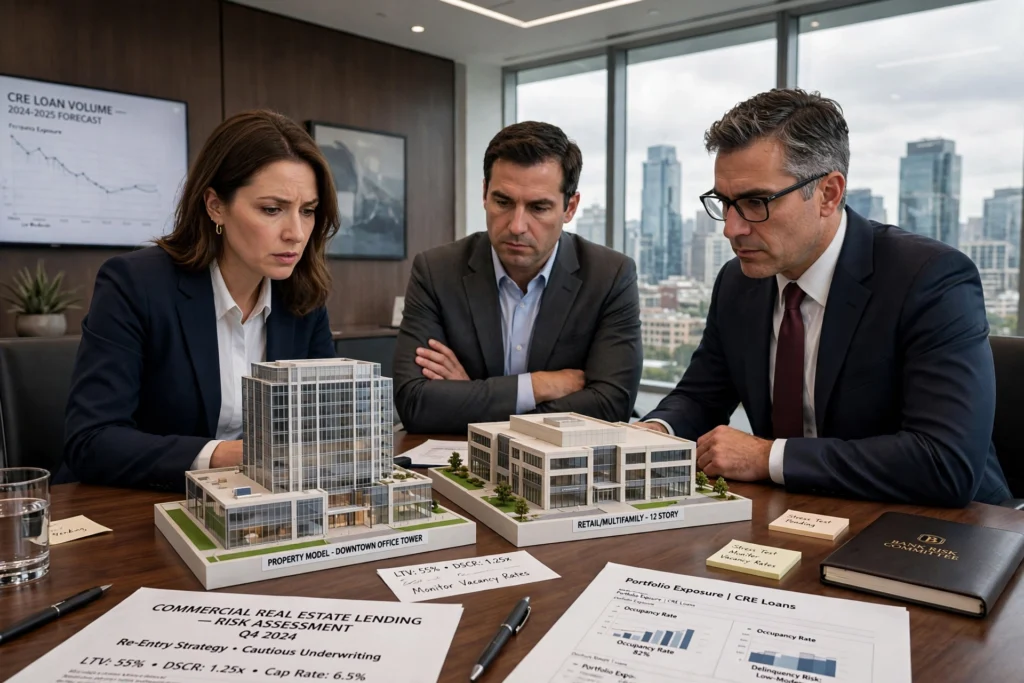
The commercial real estate (CRE) lending market in the United States is showing signs of revival as several major banks cautiously expand their exposure to the sector. Following years of reduced activity triggered by higher interest rates, declining office demand, and concerns over loan defaults, lenders are now selectively financing projects with strong fundamentals and lower risk profiles.
Banks Shift Focus to Resilient Asset Classes
Instead of aggressively increasing exposure across the sector, large U.S. banks are prioritising resilient property segments such as multifamily housing, industrial facilities, logistics parks, and data centres. These asset classes continue to benefit from strong demand, supported by e-commerce growth, housing shortages, and rising investment in artificial intelligence (AI) infrastructure.
Lending Standards Remain Strict
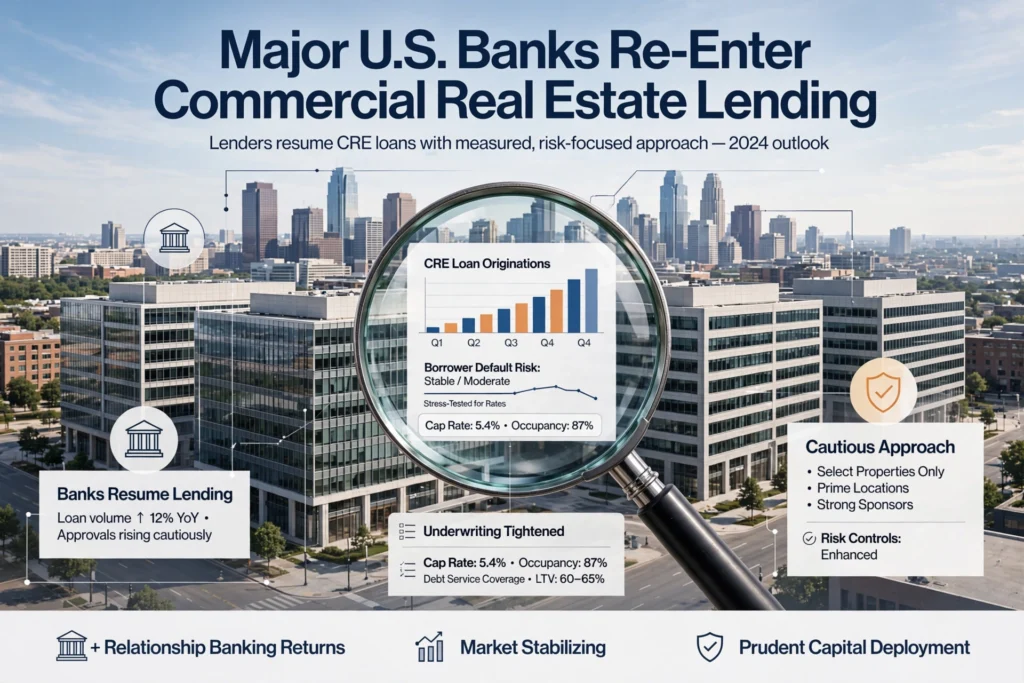
Although banks are becoming more active in commercial real estate lending, they remain disciplined in their underwriting practices. Financial institutions are conducting more rigorous due diligence and favouring borrowers with strong balance sheets, stable cash flows, and well-performing assets. This cautious strategy is aimed at minimising credit risk while taking advantage of improving market conditions.
Office Sector Still Faces Challenges

Despite the renewed interest in CRE lending, the office property segment continues to face headwinds due to hybrid work models and elevated vacancy rates in several major U.S. cities. As a result, banks remain highly selective when financing office projects and continue to avoid properties with uncertain occupancy prospects.
Market Outlook
Industry experts believe that improving market stability and easing financial uncertainty are encouraging lenders to return to the commercial real estate market. However, banks are expected to remain selective, concentrating on high-quality projects with sustainable income potential rather than pursuing aggressive loan growth.
The gradual return of major financial institutions is being viewed as a positive signal for the U.S. commercial real estate sector. If economic conditions and interest rates remain stable, lending activity is expected to strengthen further in the coming months while maintaining a prudent risk-management approach.


 By
By
 By
By