


As India’s economy continues to evolve, merely saving money is no longer enough. The real challenge for investors in 2026 is to allocate capital wisely across asset classes that offer a balance of growth, stability, and long-term wealth creation.
With inflation, shifting interest rates, rapid infrastructure development, and expanding investment opportunities, investors are increasingly looking beyond traditional avenues such as bank fixed deposits and physical gold. Today, a well-diversified portfolio includes real estate, equities, mutual funds, REITs, gold, debt instruments, and even global investment opportunities.
A disciplined investment strategy—not short-term speculation—remains the foundation of sustainable financial success.
Real Estate: A Cornerstone of Long-Term Wealth Creation
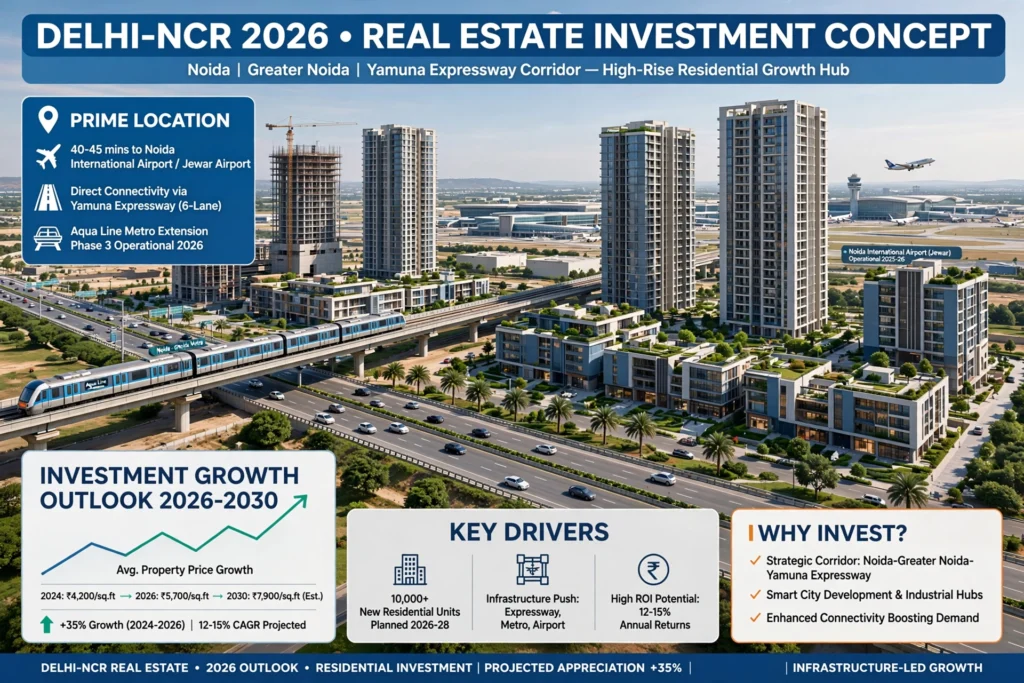
Real estate continues to be one of India’s most preferred investment avenues, driven by urbanisation, infrastructure expansion, and rising housing demand.
The Delhi-NCR region, particularly Noida, Greater Noida, Greater Noida West, the Yamuna Expressway corridor, and areas benefiting from major infrastructure projects such as metro expansion, expressways, and airport connectivity, continues to attract both end-users and long-term investors.
However, successful real estate investing is about much more than purchasing property at an attractive price. Investors should carefully evaluate:
- Developer credibility and delivery track record
- Legal approvals and regulatory compliance
- Location fundamentals
- Infrastructure growth potential
- Rental demand and future appreciation prospects
“Successful real estate investment is not about buying the cheapest property; it is about identifying the right location, selecting a credible developer, and investing at the right stage of the market cycle. Infrastructure-led growth corridors are expected to remain key wealth creators over the coming years.”
Real Estate Market Expert
Equities and Mutual Funds: Building Wealth Through Consistent Investing
Equity markets remain one of the most effective long-term wealth creation tools despite short-term volatility.
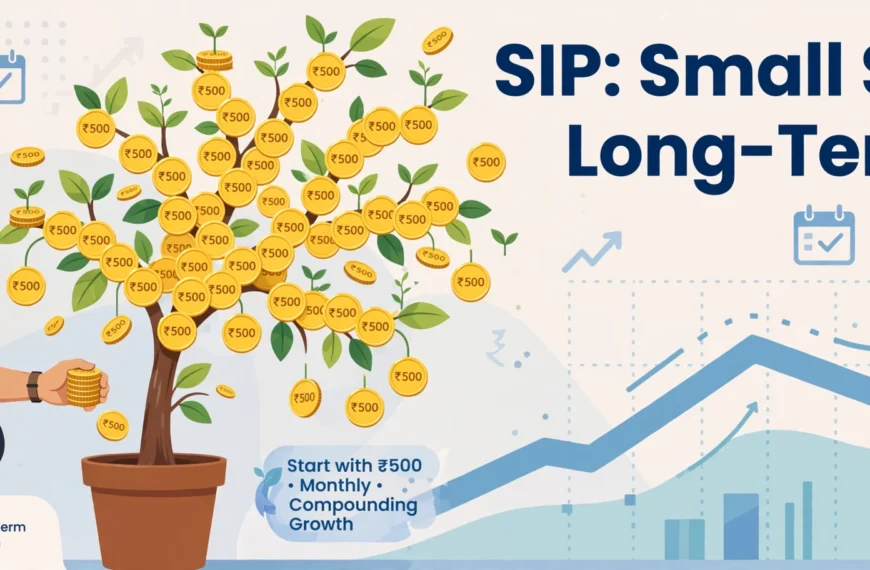
For new investors, Systematic Investment Plans (SIPs) through diversified mutual funds continue to offer a disciplined approach to investing while reducing the impact of market fluctuations.
Financial experts recommend focusing on:
- Diversified equity mutual funds
- Index funds
- Large-cap and flexi-cap funds
- High-quality fundamentally strong companies
- Long-term investment horizons rather than short-term market movements
Patience, consistency, and disciplined investing continue to outperform attempts at market timing.
Gold: A Timeless Portfolio Diversifier
Gold has always played an important role in preserving wealth, particularly during periods of economic uncertainty and inflation.
Modern investors now have multiple avenues beyond physical gold, including:
- Gold ETFs
- Digital Gold
- Sovereign Gold Bonds (subject to availability)
These investment options offer greater convenience, transparency, and security while helping diversify an overall investment portfolio.
Emerging Investment Opportunities in 2026
The investment landscape is becoming increasingly diversified. Several modern asset classes are gaining popularity among informed investors.
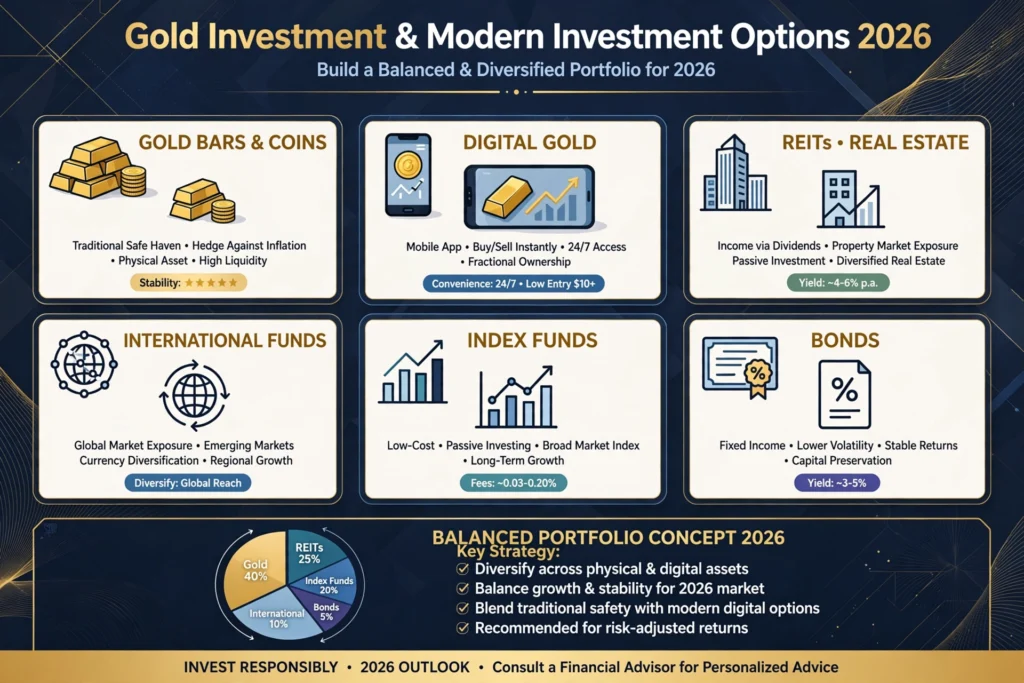
REITs (Real Estate Investment Trusts)
REITs enable investors to participate in income-generating commercial real estate without purchasing physical property. They provide an opportunity to earn potential rental income and capital appreciation with relatively lower investment amounts.
International Funds
Global mutual funds and international investment products allow Indian investors to gain exposure to leading multinational companies and overseas markets, helping diversify geographical risk.
Index Funds
Low-cost index funds continue to gain traction due to their simplicity, transparency, and long-term performance aligned with benchmark indices.
Debt Instruments and Bonds
Government securities, corporate bonds, and debt mutual funds remain valuable components of a balanced portfolio, offering stability and comparatively lower volatility.
The Seven Golden Rules of Smart Investing
- Define clear financial goals before investing.
- Diversify across multiple asset classes.
- Invest with a long-term perspective.
- Evaluate risk alongside expected returns.
- Conduct thorough legal and financial due diligence before purchasing real estate.
- Treat market corrections as potential investment opportunities rather than reasons to panic.
- Seek professional financial advice whenever required.
The Bottom Line
Successful investing is not determined by how much money you invest but by the quality of your decisions, financial discipline, and long-term commitment.
In 2026, investors who combine traditional assets such as real estate and gold with modern investment vehicles including equities, mutual funds, REITs, and international funds are likely to build stronger and more resilient portfolios.
A carefully diversified investment strategy can help investors navigate market uncertainties while creating sustainable long-term wealth.
Disclaimer: This article is intended solely for informational purposes and should not be construed as investment, financial, tax, or legal advice. Investors are encouraged to conduct independent research and consult qualified financial advisors before making investment decisions.

 By
By
 PornPics says:
 By
By