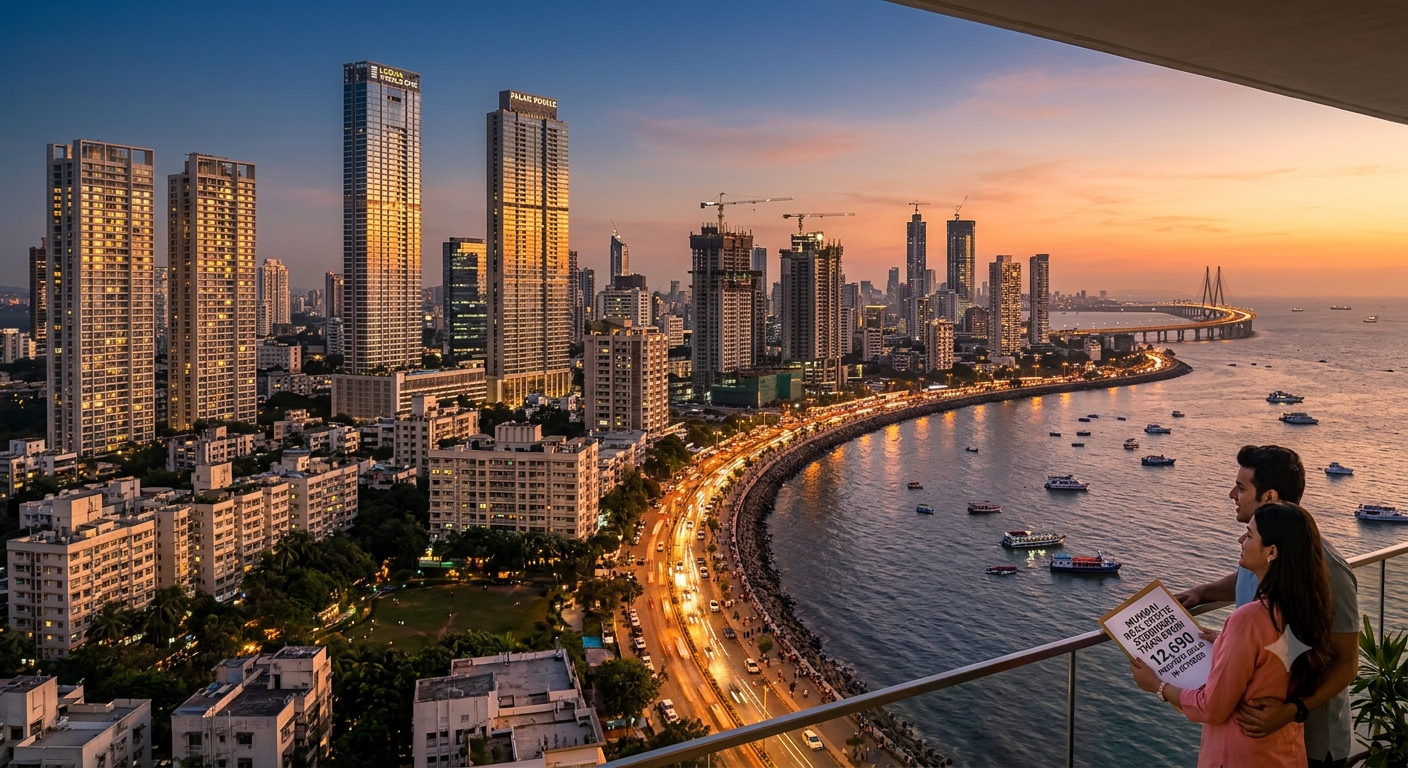

Mumbai’s real estate market continues to show remarkable resilience, keeping property transactions on an upward trajectory despite seasonal challenges. The city recorded 12,690 property registrations in October 2026, marking a 9% year-on-year increase, while stamp duty collections climbed to ₹1,173 crore. The numbers highlight sustained homebuyer interest and the financial capital’s enduring position as one of India’s most active residential property markets.
MUMBAI : India’s financial capital continues to demonstrate resilience in residential real estate, with property registrations recording healthy growth in October 2026 despite seasonal factors and a relatively challenging festive calendar. According to data from Maharashtra’s Registration and Stamps Department, Mumbai recorded 12,690 property registrations during October 2026. This represents an increase of approximately 9% compared with 11,649 registrations recorded in October last year.
The performance also translated into higher government revenue, with stamp duty collections reaching approximately ₹1,173 crore during the month, compared with nearly ₹1,040 crore in October 2025.The figures, analysed by Knight Frank India, underline the continued activity in one of the country’s most important residential property markets.
Festive Season Fails to Slow Transaction Activity
October traditionally presents certain seasonal challenges for property registrations in India.Religious observances, including the Shradh period, can influence the timing of property purchases, with some buyers preferring to postpone transactions until more auspicious dates. This year, the Shradh period extended from September 26 to October 10. Despite these factors, Mumbai maintained a positive registration trend. During the Shradh period, the city recorded 3,419 property registrations, approximately 2% higher than the corresponding period last year.The average number of registrations per day also increased from 306 to 311.This suggests that underlying housing demand remained relatively stable despite seasonal considerations.
January–October Performance Remains Strong
The broader performance of Mumbai’s property market during the first ten months of 2026 is equally significant.Between January and October, the city recorded approximately 1,32,040 property registrations, representing a 7% year-on-year increase.Stamp duty collections during this period reached approximately ₹11,756 crore, compared with ₹11,186 crore during the corresponding period in 2025.These figures indicate sustained transaction activity and continued revenue generation for the Maharashtra government.
Premium Housing Continues to Attract Attention
Mumbai’s residential property market is characterised by diverse buyer segments, ranging from first-time homeowners to high-net-worth individuals acquiring premium and ultra-luxury residences.Locations such as Worli, Bandra, Juhu, Lower Parel and South Mumbai continue to attract buyers seeking premium addresses, connectivity and lifestyle amenities.However, aggregate registration figures should not be interpreted as evidence of growth exclusively in the luxury housing segment.The overall registration data includes transactions across different price categories and both primary and secondary property markets.
Implications for Delhi-NCR
Mumbai’s performance offers useful insights for other metropolitan property markets, particularly Delhi-NCR.Noida, Greater Noida and Gurugram have witnessed growing interest in premium residential developments, alongside demand from end-users seeking better housing options.The Mumbai data reinforces the importance of genuine end-user demand, affordability and employment-linked housing requirements in sustaining property markets.
PropertySansar Words
Mumbai’s October registration numbers offer a positive indication of market activity. However, a comprehensive assessment requires examining transaction values, housing inventory, new launches, affordability and the distribution of demand across different price categories.The broader message is clear: India’s leading residential markets continue to attract buyers, although the nature and strength of demand vary considerably across locations.


 By


 By