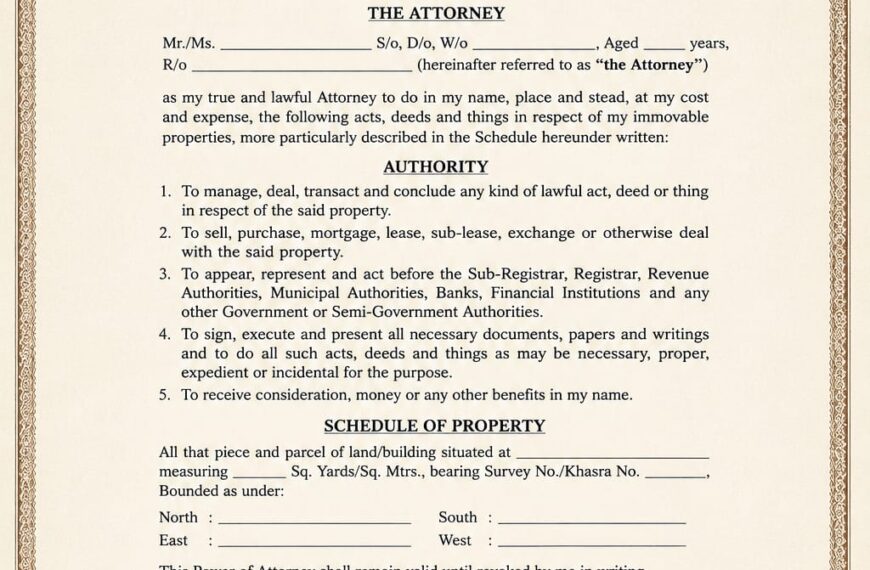



Property ownership can become complex when multiple individuals share ownership rights in the same asset. While joint ownership often makes property acquisition more affordable and accessible, it can also lead to legal, financial, and inheritance-related disputes if the rights and responsibilities of each co-owner are not clearly defined.
In many cases, disagreements among co-owners over possession, usage, transfer, or inheritance can result in lengthy legal battles. To avoid such situations, property owners should understand the legal framework governing joint ownership and ensure that ownership rights are properly documented.
What Is Joint Ownership

When a property is owned by more than one person, it is known as joint ownership or co-ownership. This arrangement is common among family members, spouses, business partners, siblings, and investors who pool resources to purchase real estate.
Joint ownership can arise through:
- Purchase of a property by multiple individuals.
- Inheritance of ancestral property.
- Transfer of ownership rights to another person.
- Family settlements and succession arrangements.
- Gifts or transfers of property shares.
Each co-owner has a legal interest in the property, although the extent of that interest may vary depending on the ownership structure and documentation.
Why People Choose Joint Ownership
Joint ownership is often preferred because it offers several advantages:
- Reduced financial burden on individual buyers.
- Easier access to larger or higher-value properties.
- Shared responsibility for maintenance and expenses.
- Simplified inheritance planning in some cases.
- Greater investment opportunities through pooled capital.
However, the absence of clear agreements can create challenges when co-owners have differing expectations regarding the property’s use, sale, or management.
Rights of a Co-Owner
Under Indian property laws, every co-owner generally enjoys certain rights concerning the property.
These rights may include:
Right to Possession
Unless otherwise agreed, each co-owner has the right to possess and enjoy the property. One co-owner cannot ordinarily exclude another co-owner from using the property.
Right to Use the Property
Each co-owner is entitled to use the property in a reasonable manner consistent with the rights of other co-owners.
Right to Transfer Ownership Interest
A co-owner may transfer, gift, mortgage, or sell their share in the property, subject to applicable laws and any contractual restrictions.
Right to Seek Partition
If co-owners wish to separate their interests, they may seek partition of the property through mutual agreement or legal proceedings. Upon partition, each owner receives a clearly defined share, resulting in exclusive ownership of their allocated portion.
Co-Ownership Through Inheritance
One of the most common forms of joint ownership arises through inheritance.
Under current inheritance laws in India, sons and daughters generally enjoy equal rights in ancestral property, subject to the applicable personal laws and succession framework. As a result, inherited properties often have multiple co-owners, making clear documentation and mutual understanding essential.
Understanding “Tenants in Common”
A common form of co-ownership is known as “Tenancy in Common.”
Under this arrangement:
- Each co-owner holds a distinct ownership share.
- Ownership shares may be equal or unequal.
- Every co-owner has the right to possess and use the entire property, subject to the rights of others.
- Each co-owner can generally transfer or bequeath their share independently.
For example, one co-owner may hold a 60% interest while another holds a 40% interest. Despite the unequal shares, both may have rights relating to possession and use of the property.
Unlike some other ownership structures, the ownership share of a tenant in common does not automatically pass to the remaining co-owners upon death; instead, it generally passes according to succession laws or the owner’s will.
Common Causes of Disputes
Jointly owned properties often become the subject of disputes due to:
- Unclear ownership shares.
- Lack of written agreements.
- Disagreements over sale or transfer.
- Inheritance claims.
- Unequal financial contributions.
- Property management issues.
- Disputes regarding rental income.
- Unauthorized occupation by one co-owner.
Such disputes can remain unresolved for years if they reach the courts.
How to Avoid Co-Ownership Conflicts
Property experts recommend taking the following precautions:
Clearly Define Ownership Shares
The ownership percentage of each co-owner should be documented in the sale deed or ownership agreement.
Execute a Co-Ownership Agreement
A written agreement can clarify:
- Ownership shares.
- Usage rights.
- Maintenance responsibilities.
- Decision-making procedures.
- Exit and transfer mechanisms.
Maintain Proper Records
All ownership documents, payment records, tax receipts, and agreements should be preserved and regularly updated.
Plan for Succession
Preparing a legally valid will can help prevent inheritance-related disputes among future generations.
Consider Partition When Necessary
Where co-owners wish to separate their interests permanently, a mutually agreed partition may help avoid future conflicts.
Conclusion
Joint ownership can be an effective way to acquire and hold real estate, especially when multiple individuals contribute toward the purchase of a property. However, without proper planning and documentation, co-ownership arrangements can lead to significant legal and financial complications.
Understanding ownership rights, clearly defining each co-owner’s share, maintaining transparent records, and seeking professional legal advice when necessary can help ensure that jointly owned property remains an asset rather than a source of conflict.


 By
By


 By
By RobertCeate says: